
Product Customization
Take an existing style from our library and make it yours — colours, lenses, logo, packaging.
Tainan, Taiwan · Since 1985
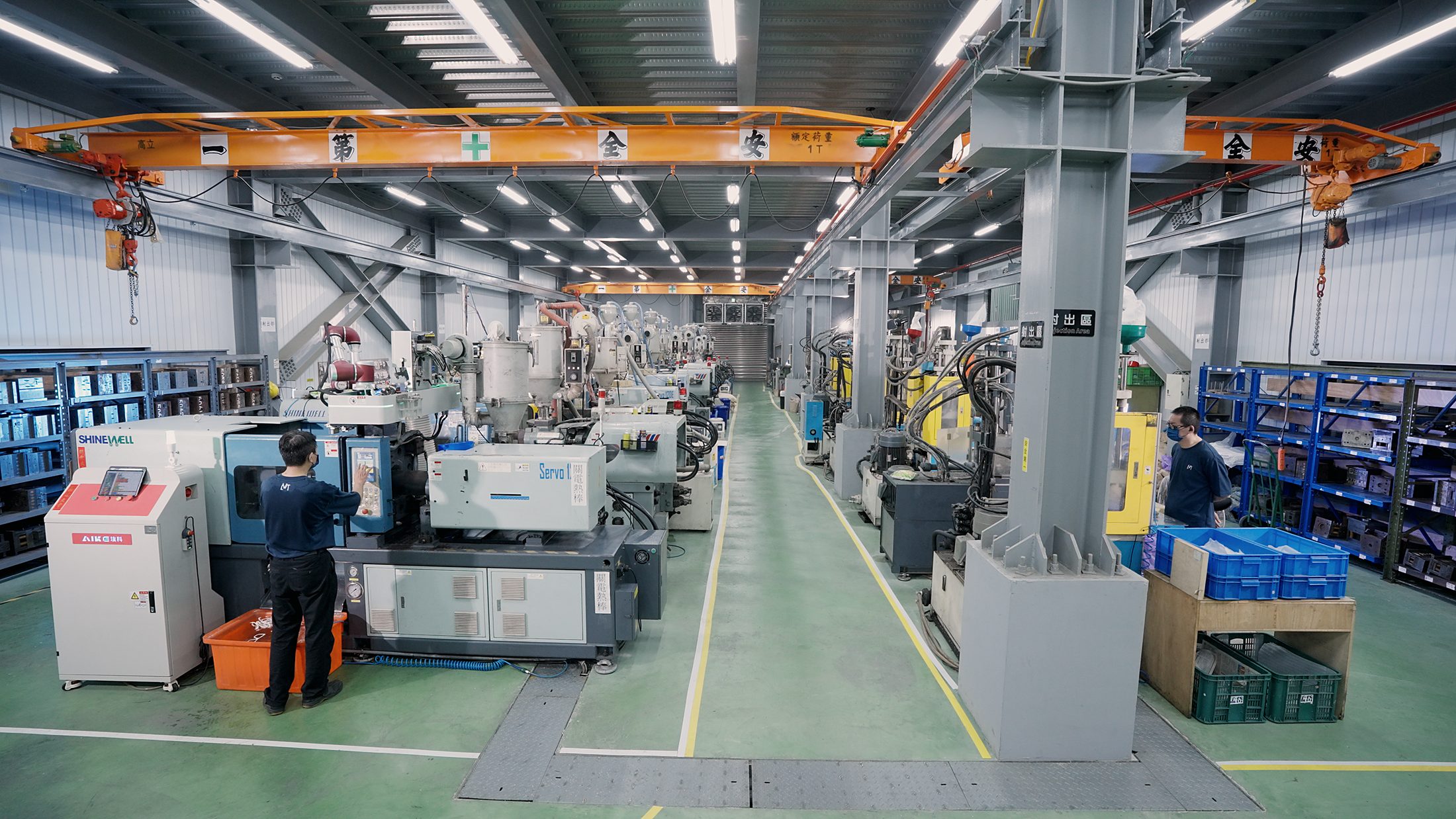
Meng Tai Eyewear is an OEM and ODM manufacturer of sunglasses and optical frames. Tooling, injection, co-injection, painting, lens processing, assembly and testing all happen inside one building in Tainan — which is why a mold revision takes hours here instead of weeks.
About us
Meng Tai Eyewear Co., Ltd. (孟岱眼鏡股份有限公司) was founded by Mr. Hsu in 1985 and is still run by the same family. From a 2,100 m² plant in Tainan we build frames and lenses for more than a hundred eyewear brands and assemblers around the world.
Everything that turns a drawing into a packed carton is under our own roof: the mold shop that cuts the tool, the presses that run it, the paint line, the lens department, and the test lab that signs it off. Nothing critical is subcontracted, so when a sample needs changing we change it ourselves.
Portfolio
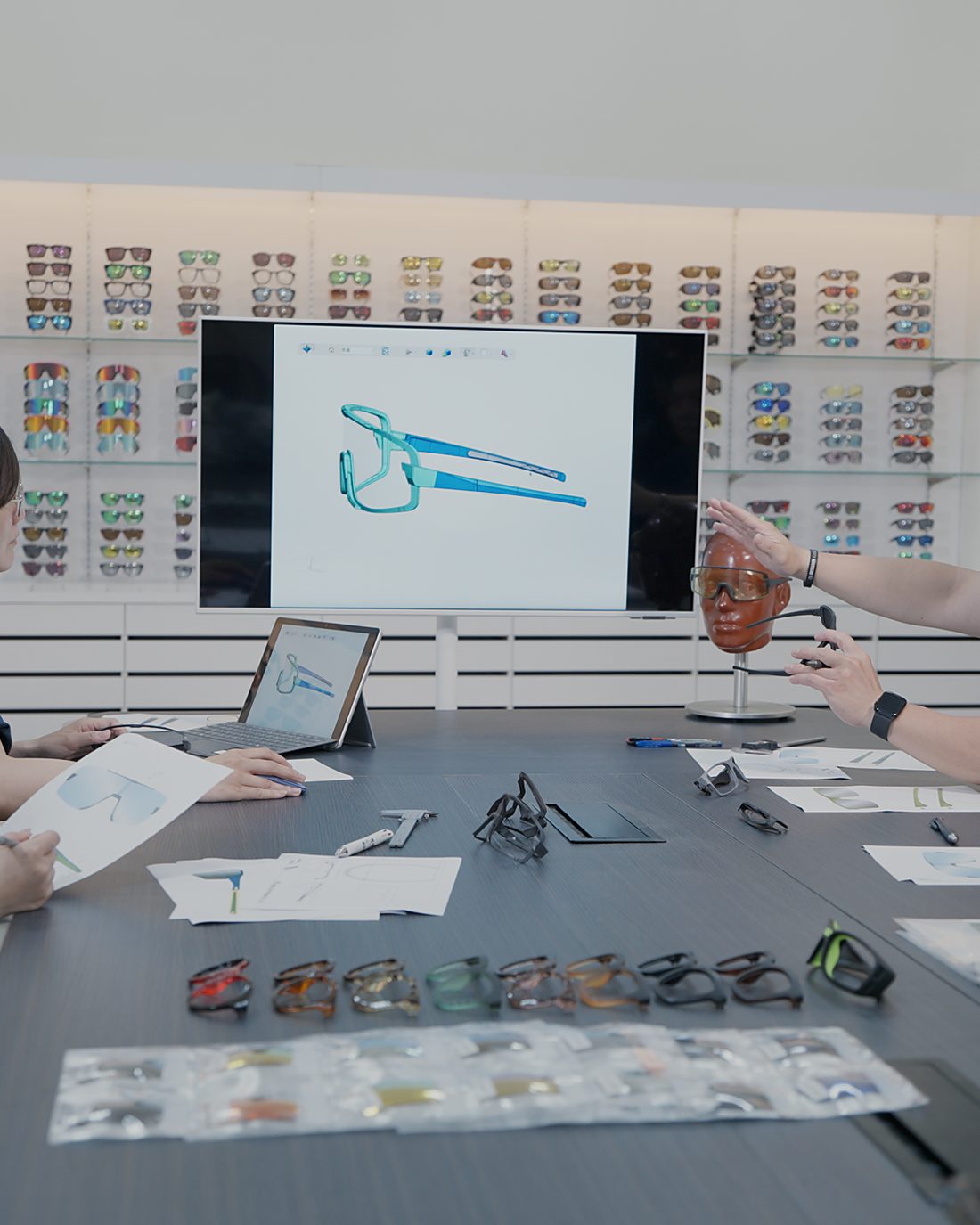
The same processes cover very different products — a wrap-around cycling shield and a pair of children's reading glasses come off the same floor.
Take an existing style from our library and make it yours — colours, lenses, logo, packaging.
Refine a design you already have so it fits better, moulds better and costs less to build.
Bring a concept or a sketch and we take it through to a production-ready product.
Capabilities
Eight departments, all in the same building. Any one can be quoted on its own, or run together as a finished product.
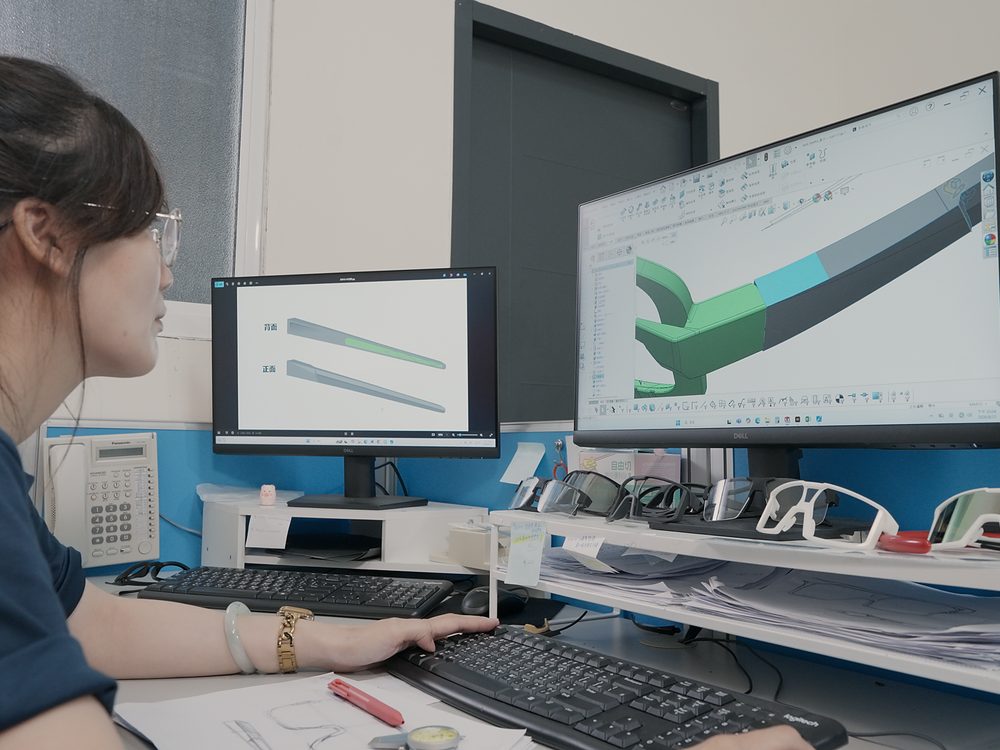
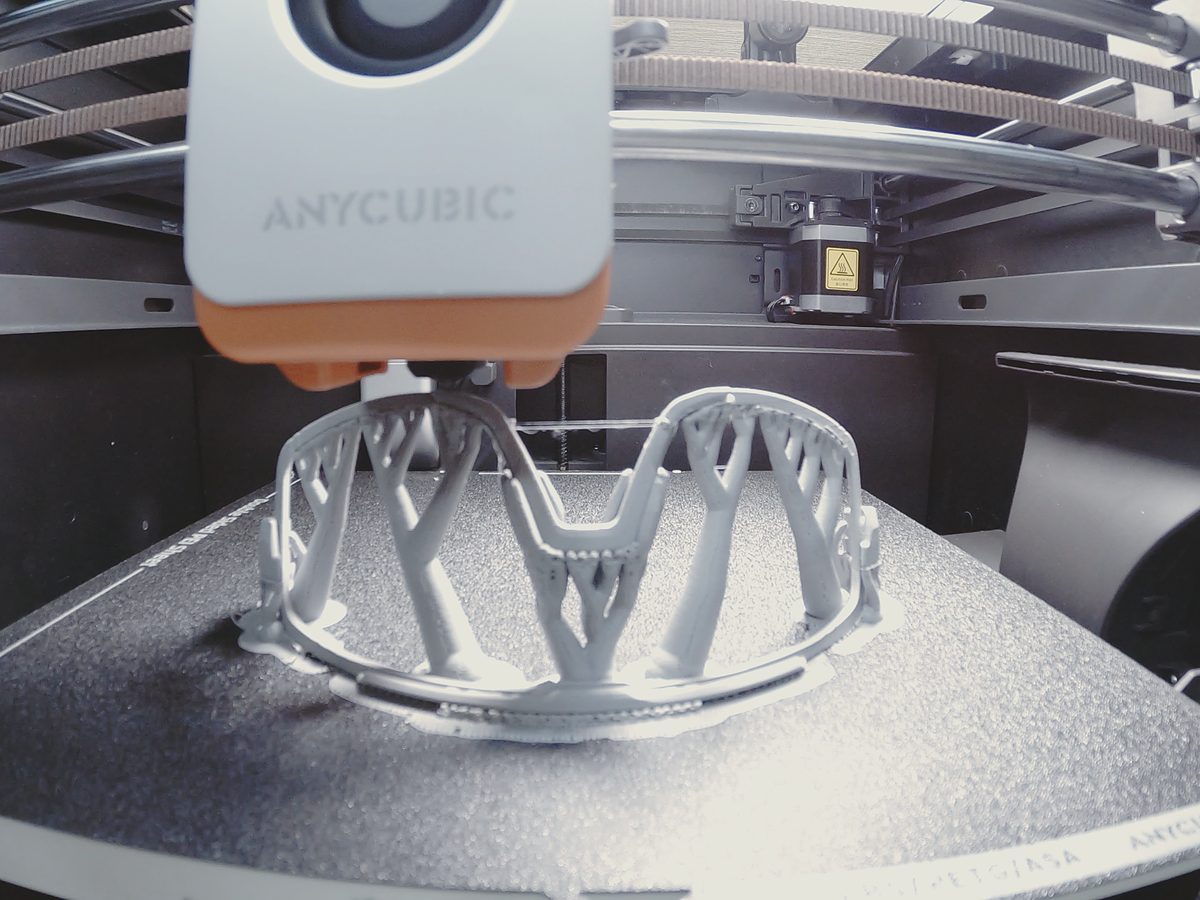
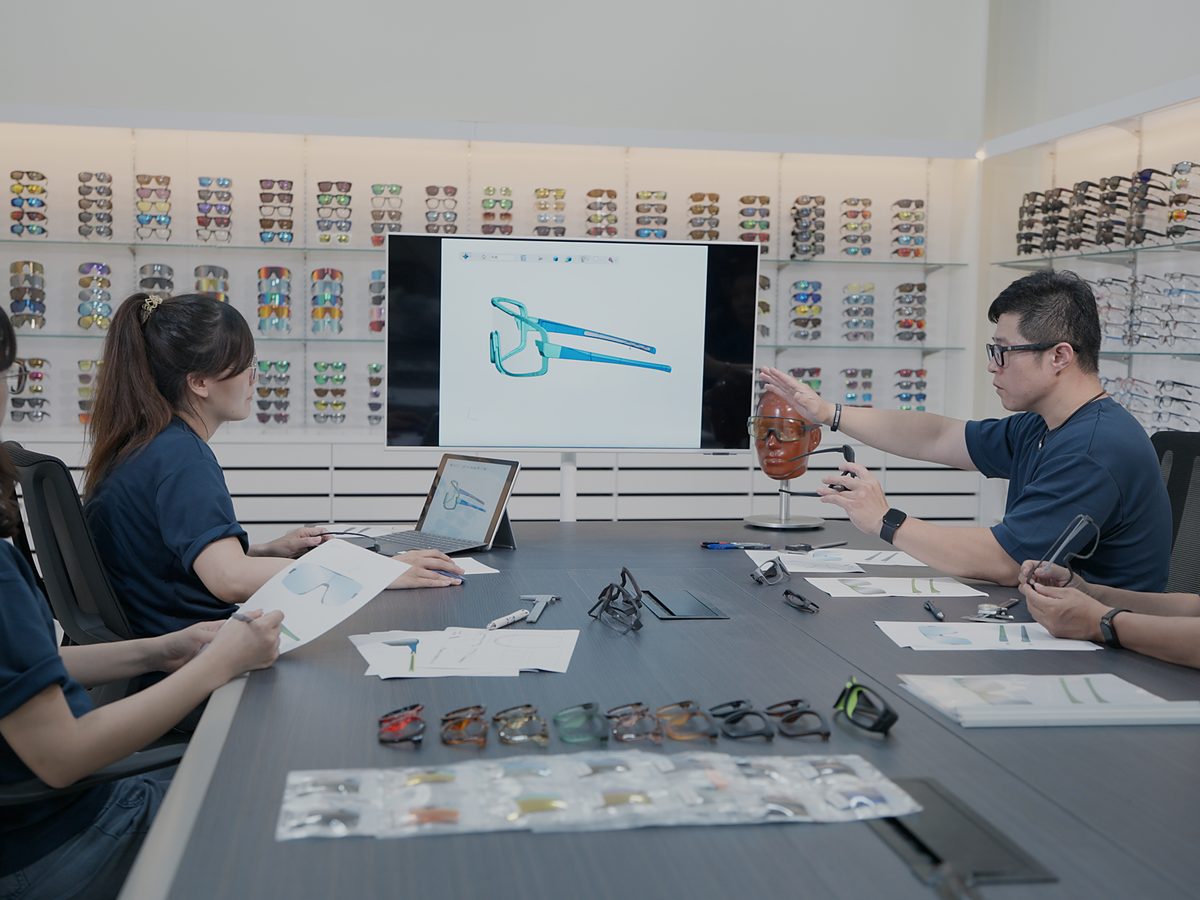
Concept, sketch, 2D and 3D CAD, then a printed prototype on our own machines — so a shape can be held in the hand before any steel is cut.
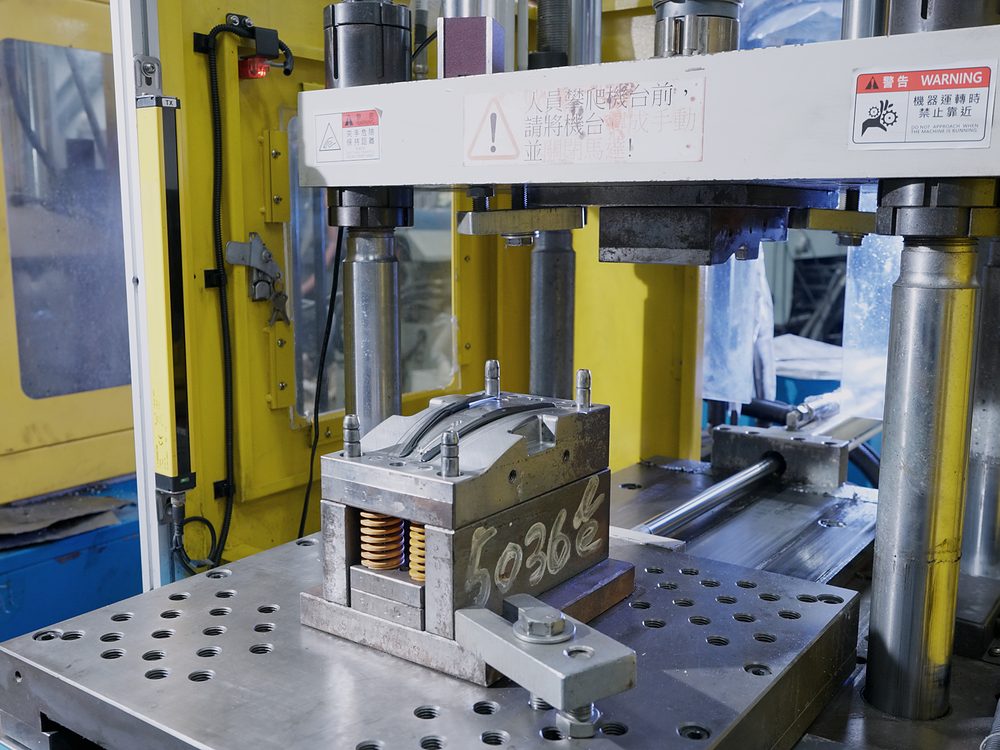
Our mold department builds, repairs and modifies the tools we run — milling, EDM, drilling and hydraulic clamping on site. Your tooling never leaves the building.
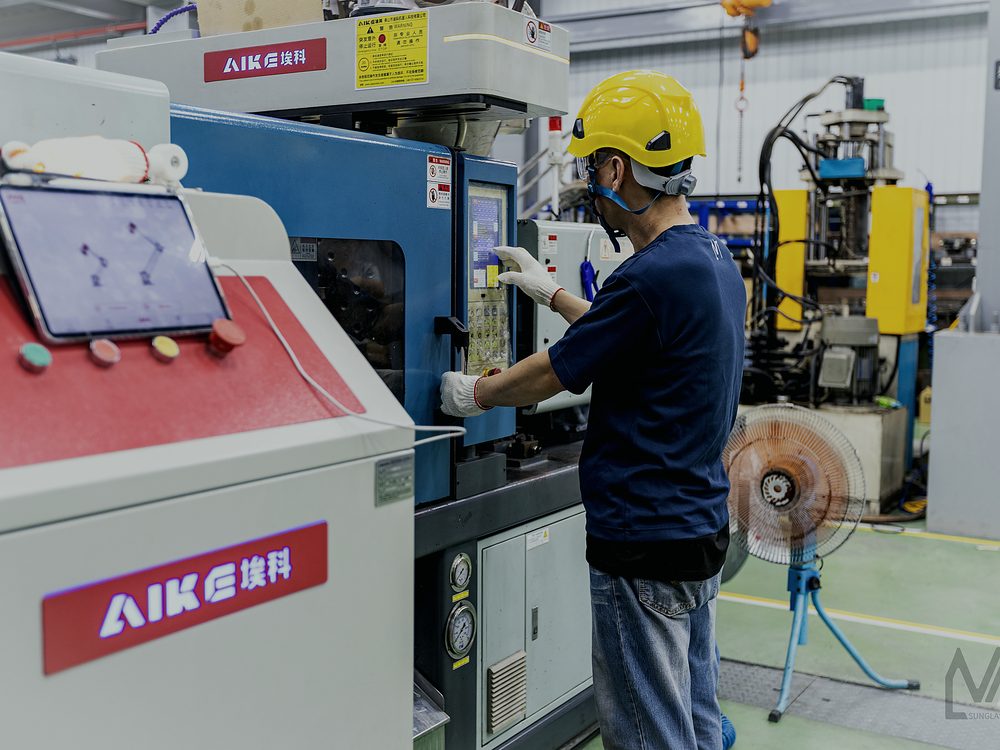
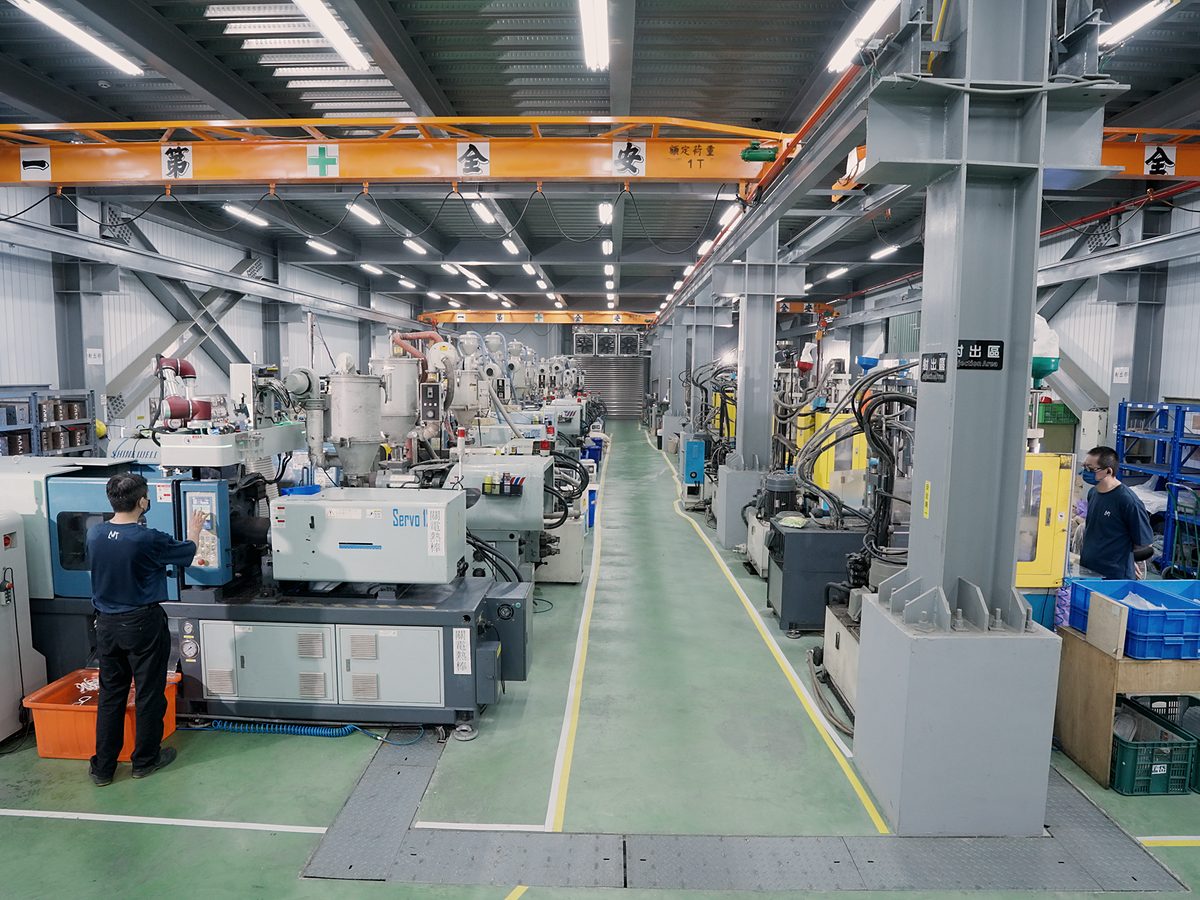
Nineteen presses — eleven standard injection and eight co-injection units — running fronts and temples in PC, TR90, PA12, PA66 and TPEE/TPR.
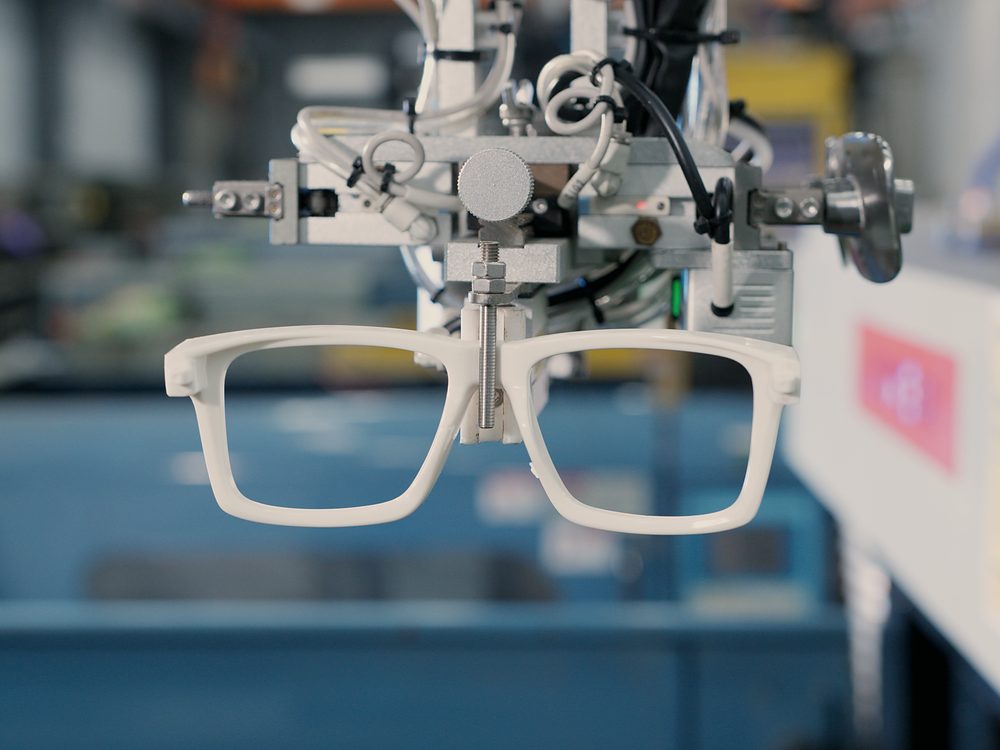
Soft-touch temple tips, dual-colour fronts and rubberised grips bonded in the mold rather than glued on afterwards, so the joint does not peel in service.
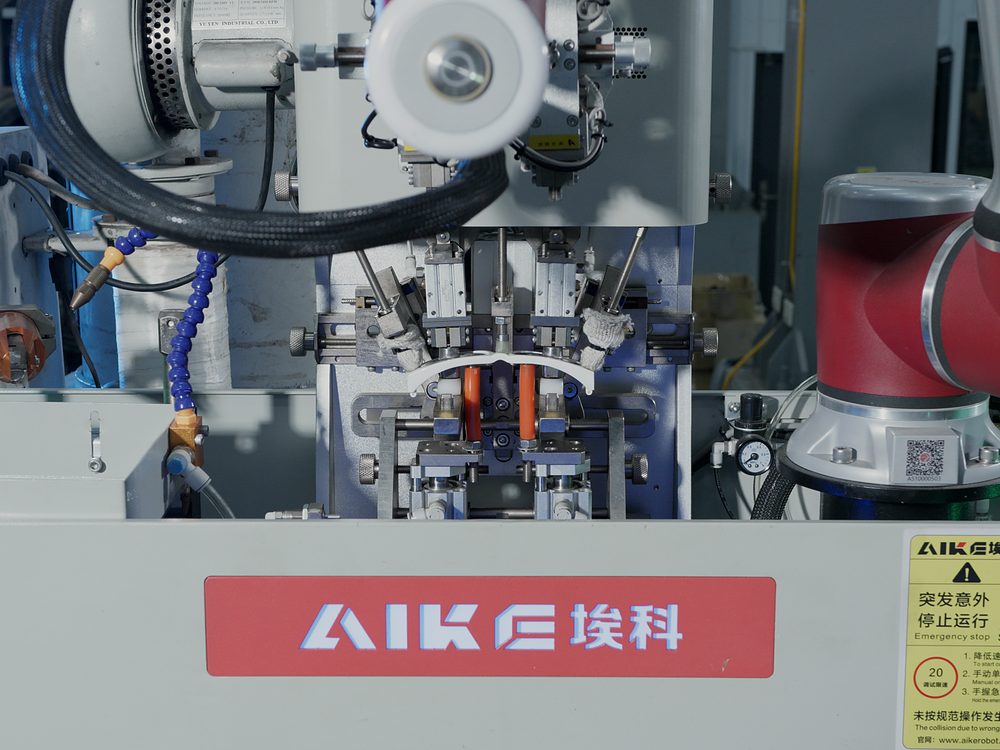
Robot cells handle degating and gate trimming straight off the press — consistent parts, fewer handling marks, and people freed for work that needs judgement.
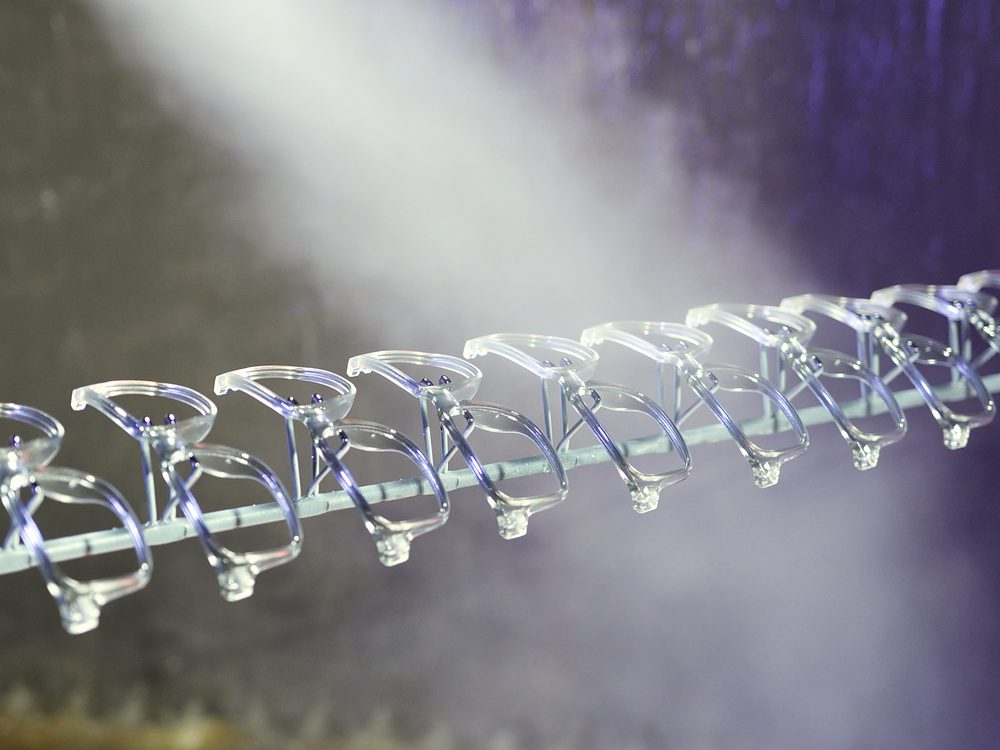
Spray coating, pattern transfer, vibratory tumbling and polishing — plus logo application by heat stamping, printing, laser engraving or metal badge.
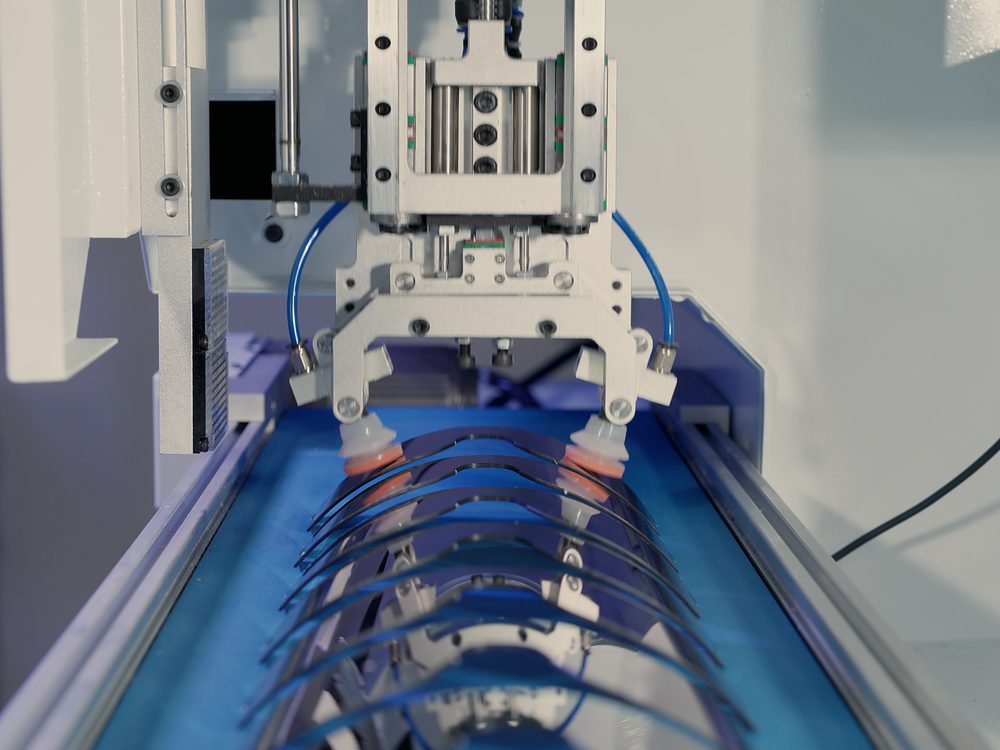
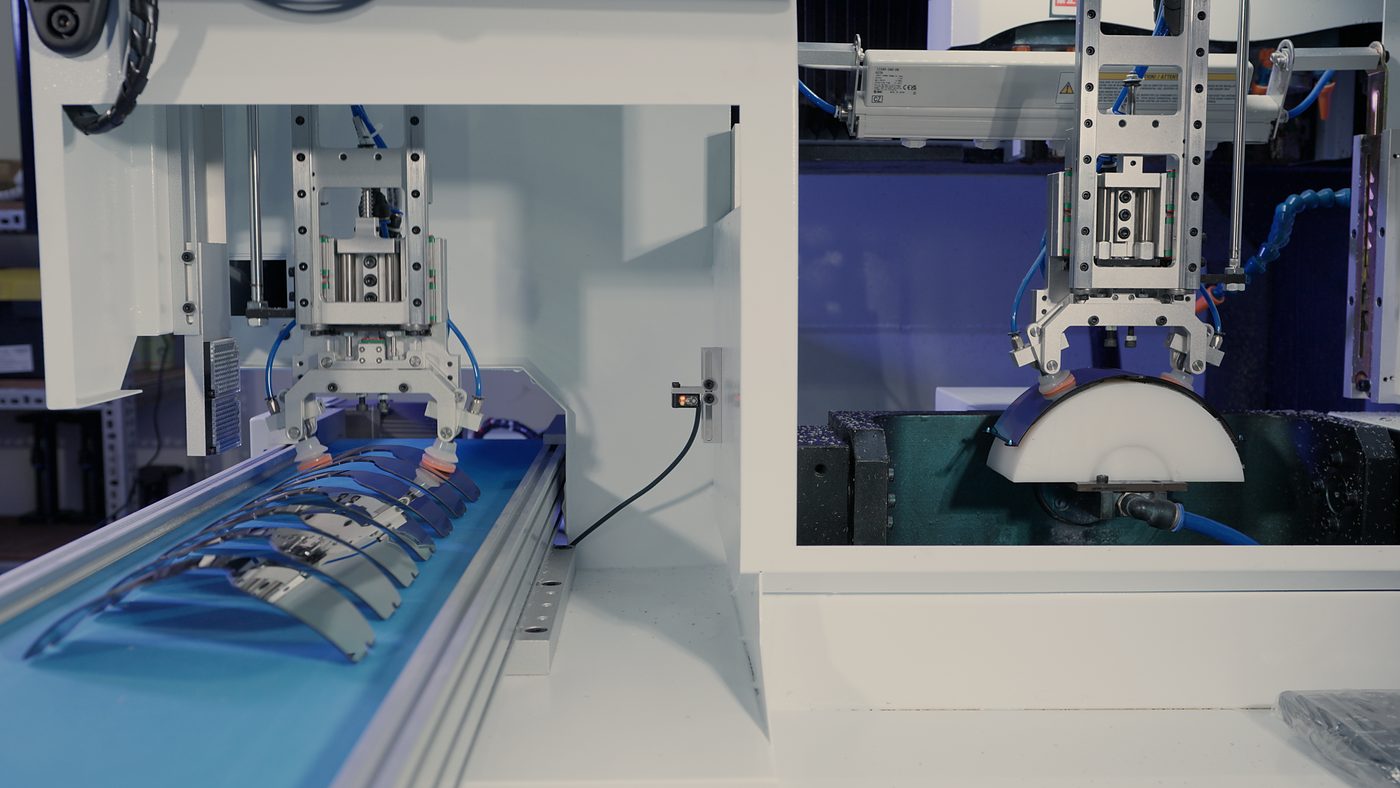
CNC lens cutting, laser etching and lens printing in house, so lens and frame are matched to each other rather than to two suppliers' tolerances.
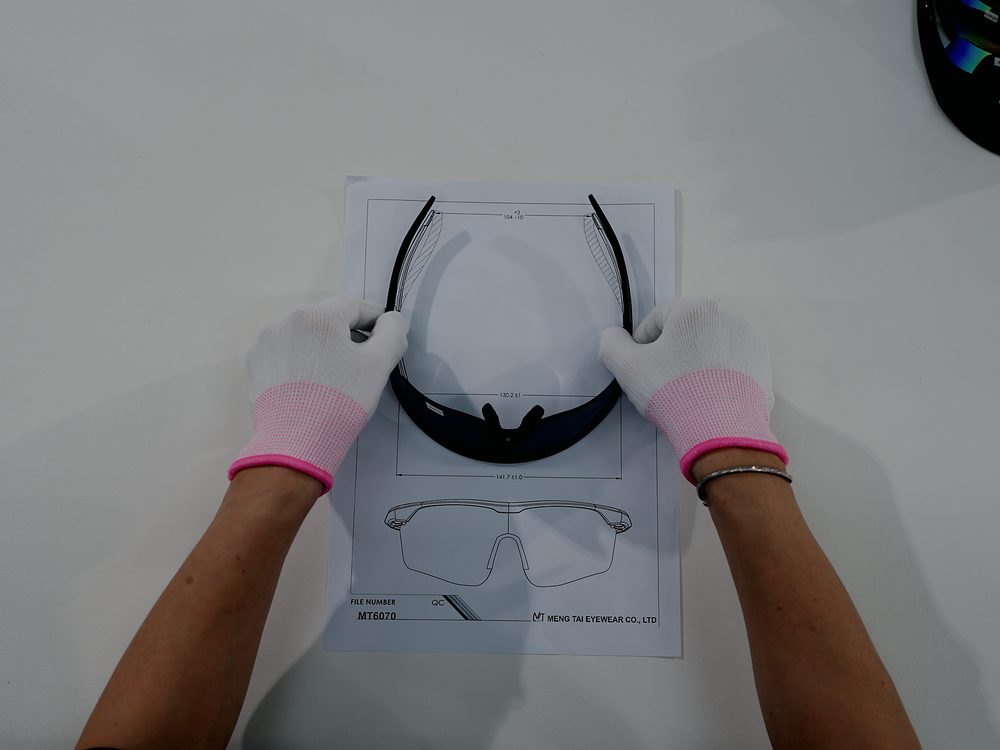
Hand assembly, dimensional check against the drawing, and packing to your carton and labelling specification.
Frame production
A frame front passes through all of these before it reaches assembly — and never leaves the site in between.
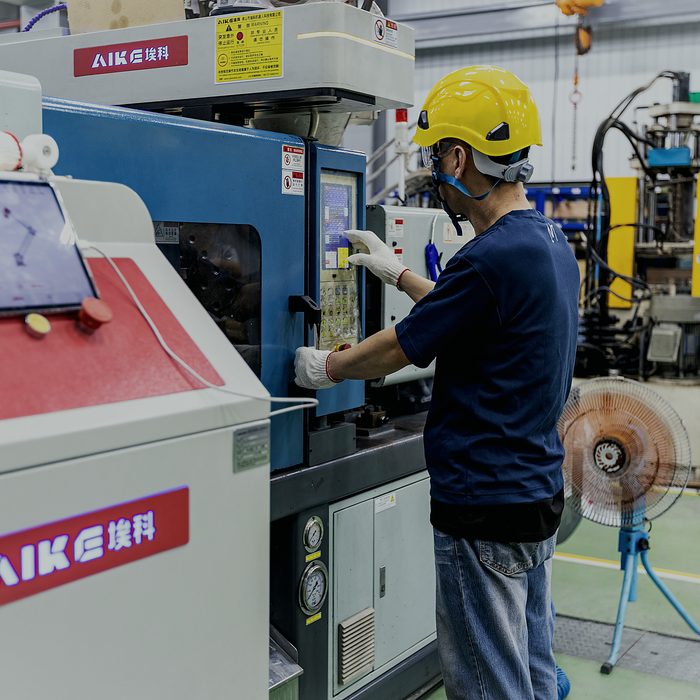
The base part is shot in the chosen polymer.
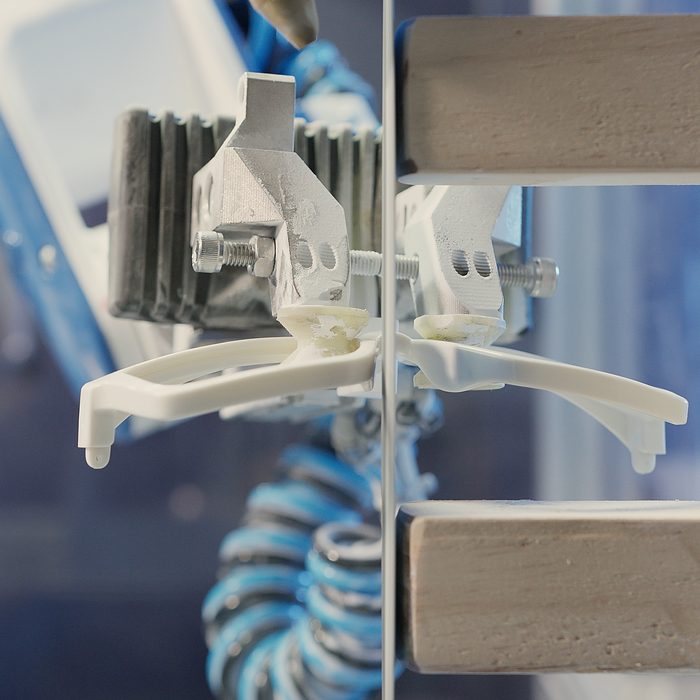
Second material over-molded for grip and colour.
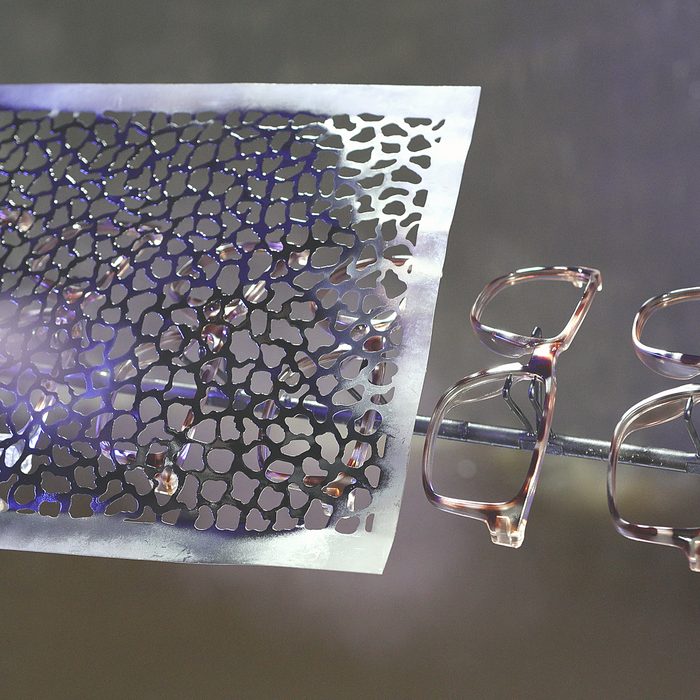
Spray coating and pattern transfer finishes.
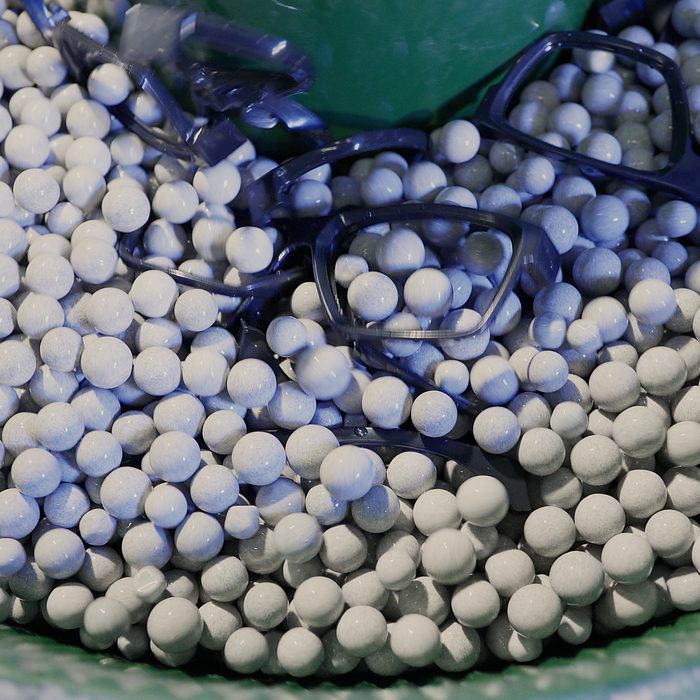
Vibratory media smooths edges and surfaces.
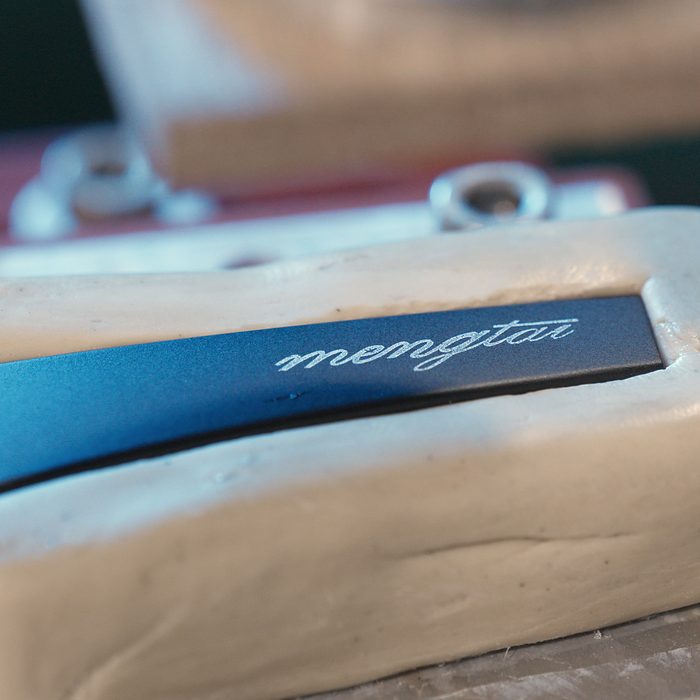
Heat stamping, printing, laser engraving, metal logo.
Materials
Each behaves differently in the mold. These are the ones our process windows, drying schedules and tooling are already set up for.
Where a brand needs a recycled or bio-based story, we run recycled PC, recycled TPR and bio-based TR90 (G850), and can supply recycled packaging to match.
Lenses
Lens work is a department here, not a purchase order. Cutting, etching, printing and fitting all happen beside the frame line.
Quality assurance
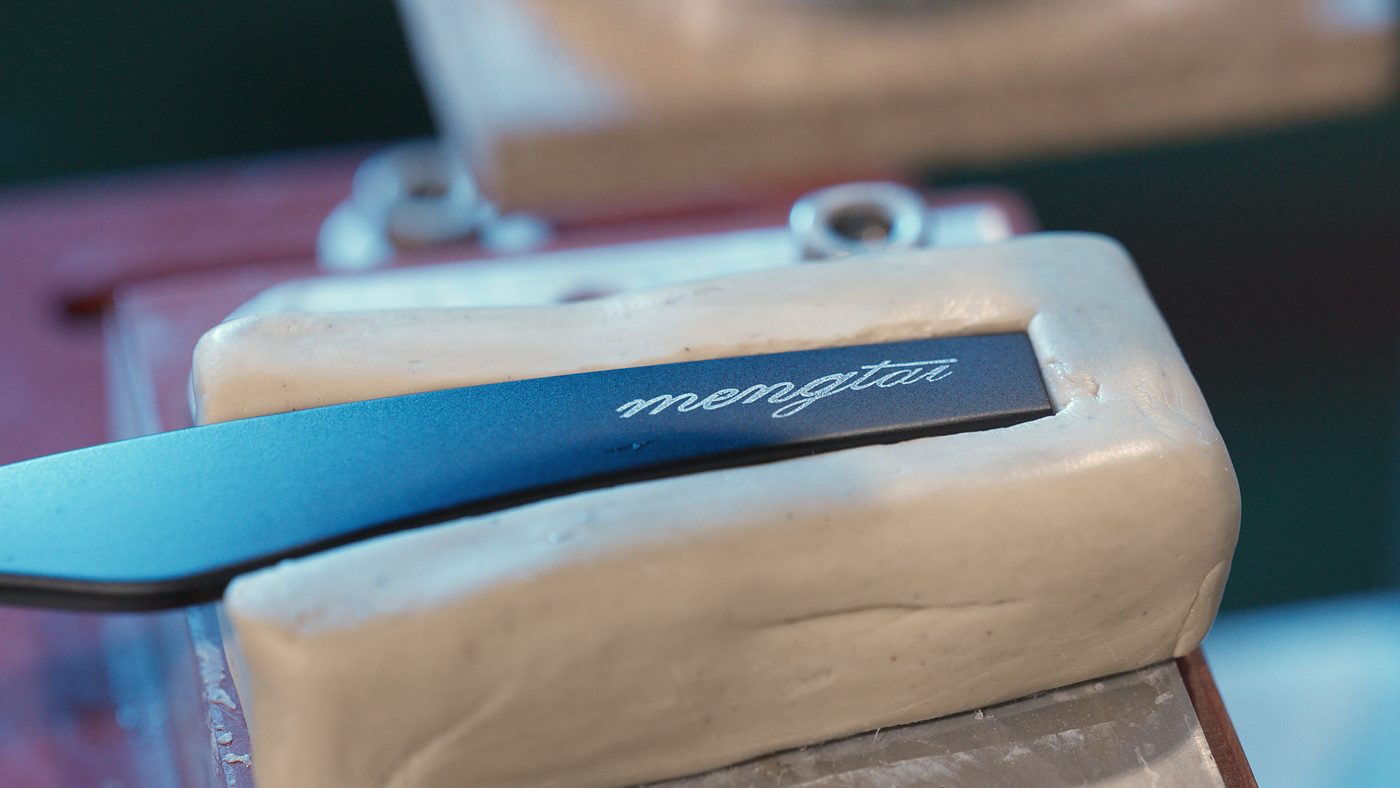
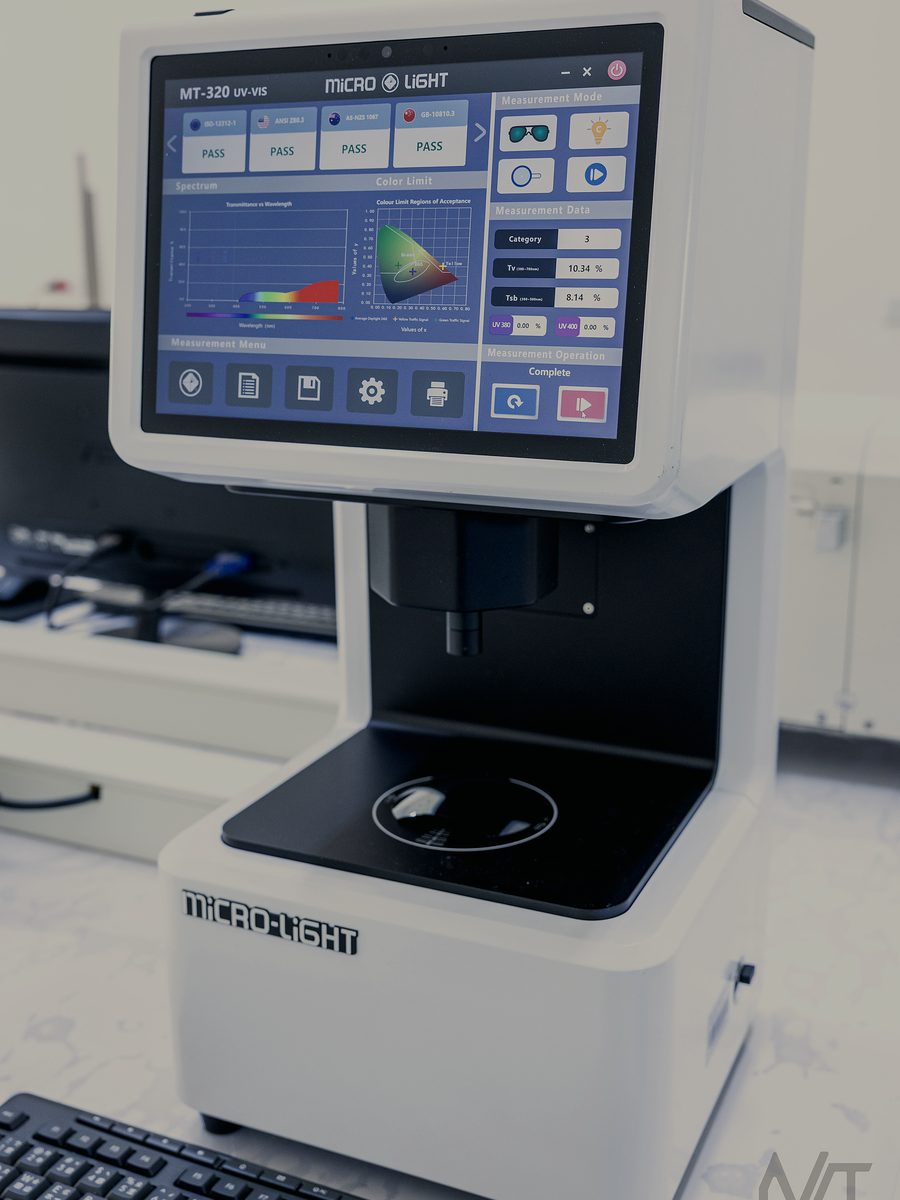
Our own lab runs the optical and mechanical tests that eyewear standards call for, so problems are found here rather than at your inspection — or your customer's.
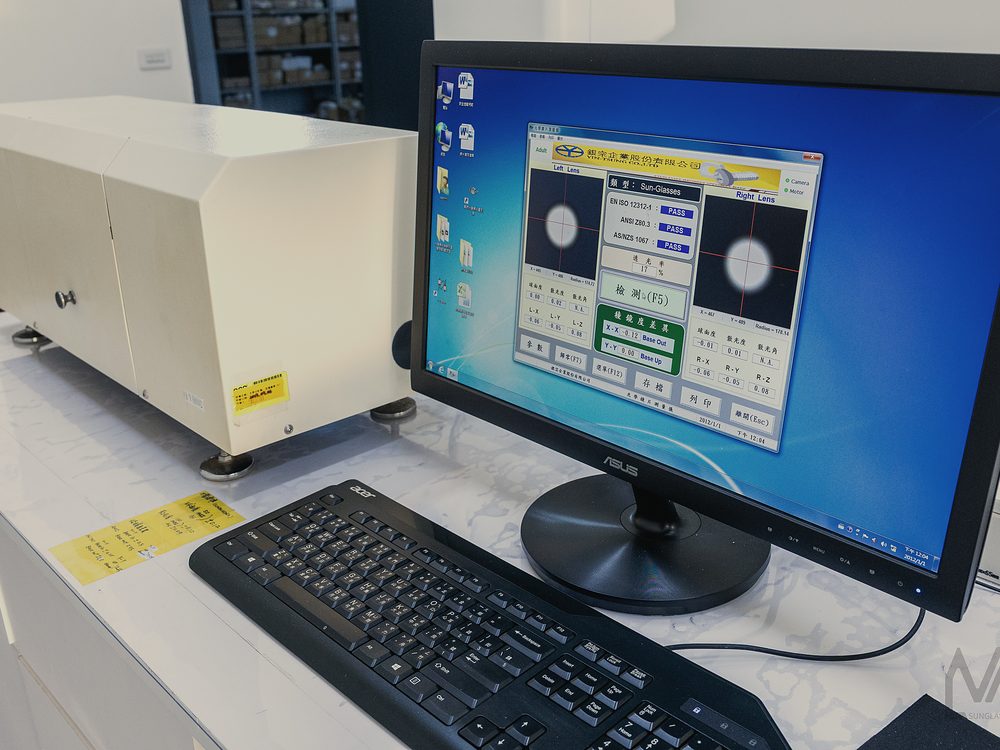
Refractive power, astigmatism and prismatic imbalance, left and right lens together.
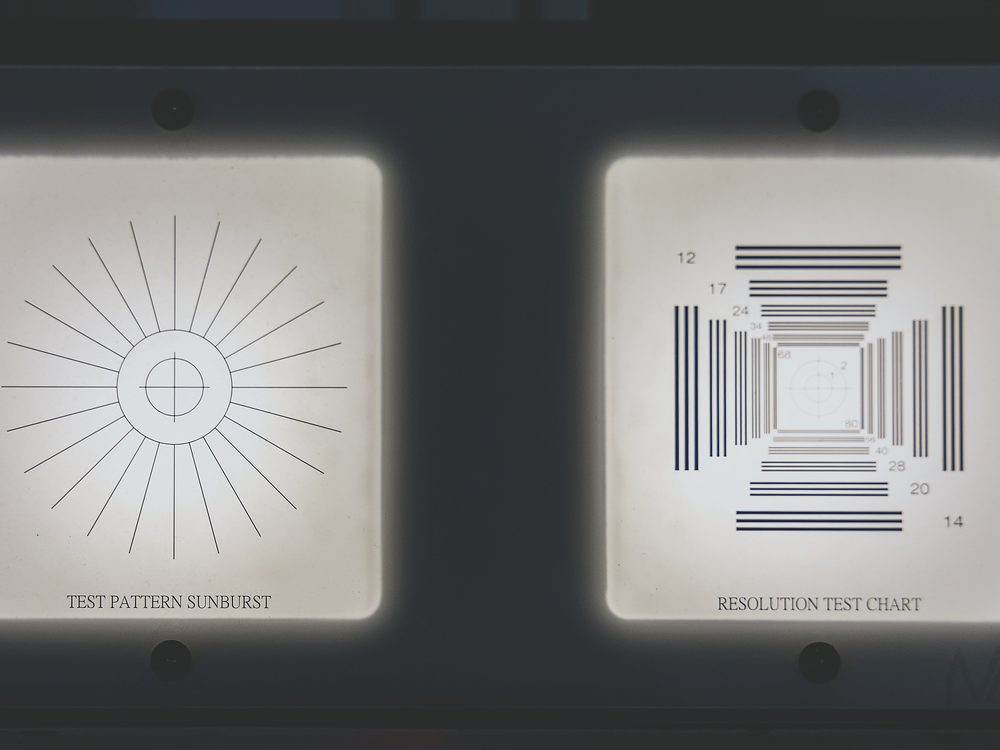
Sunburst and resolution charts viewed through the lens to catch distortion.
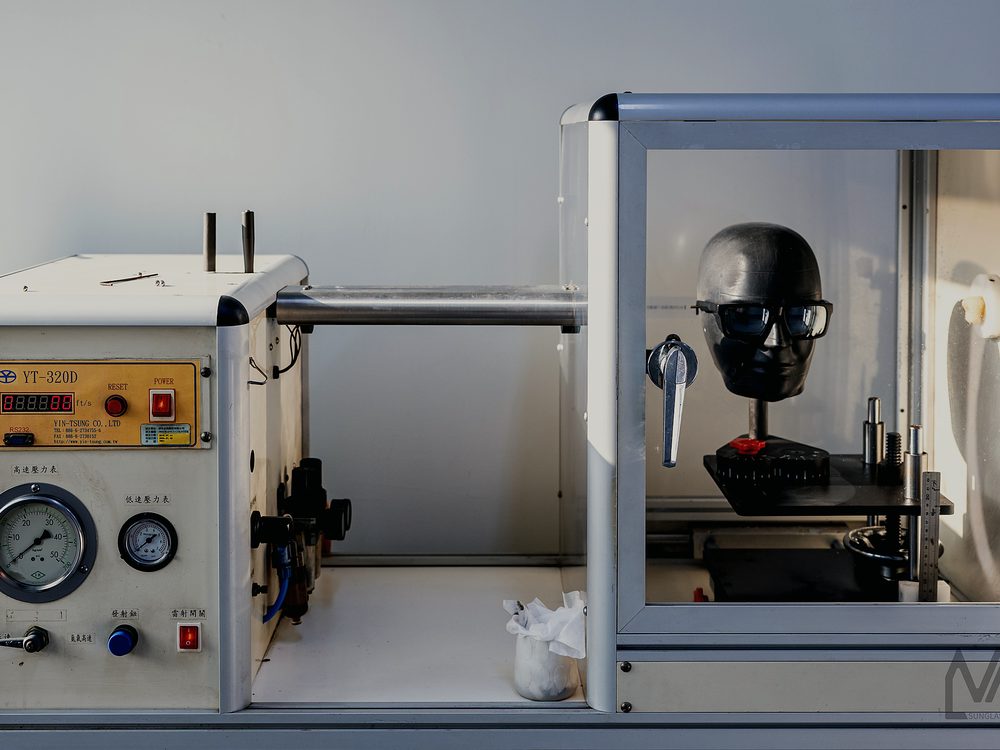
A steel ball fired at the lens on a head form, to the speed the standard specifies.
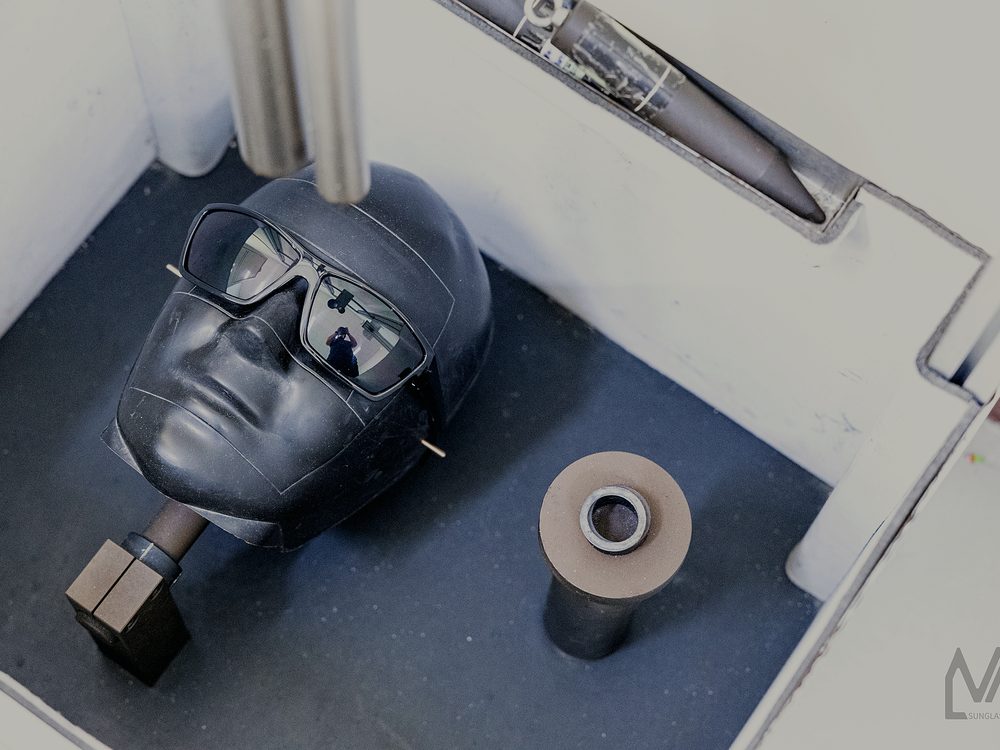
Dropped mass onto the mounted frame, checking nothing fractures or releases.
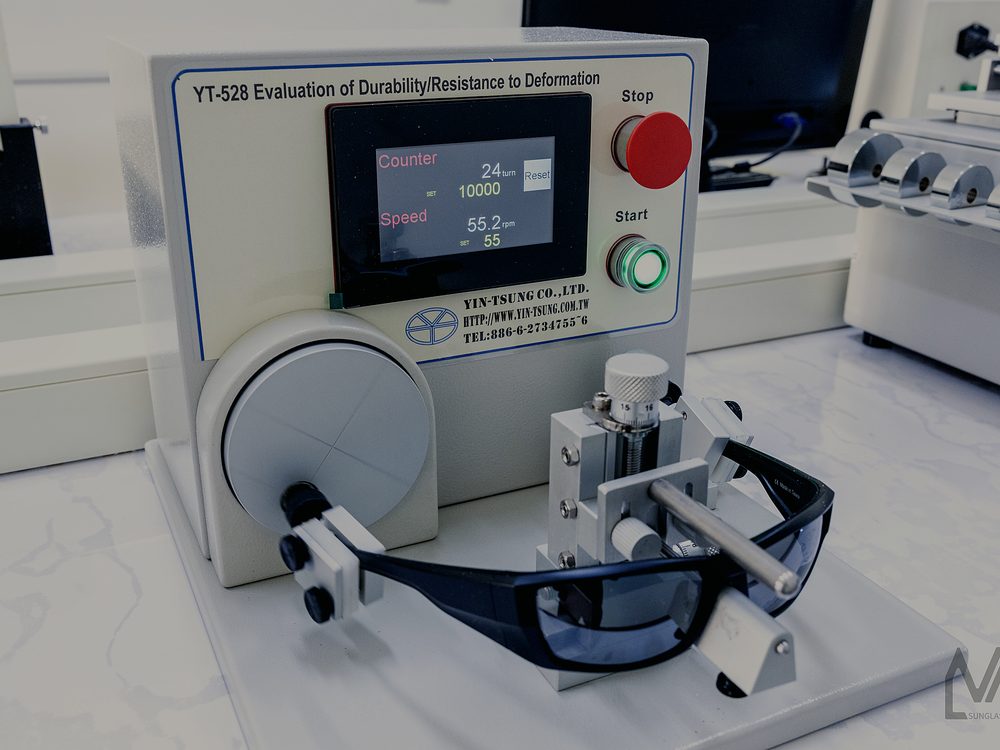
Repeated opening and closing — up to 10,000 cycles — watching for permanent set.
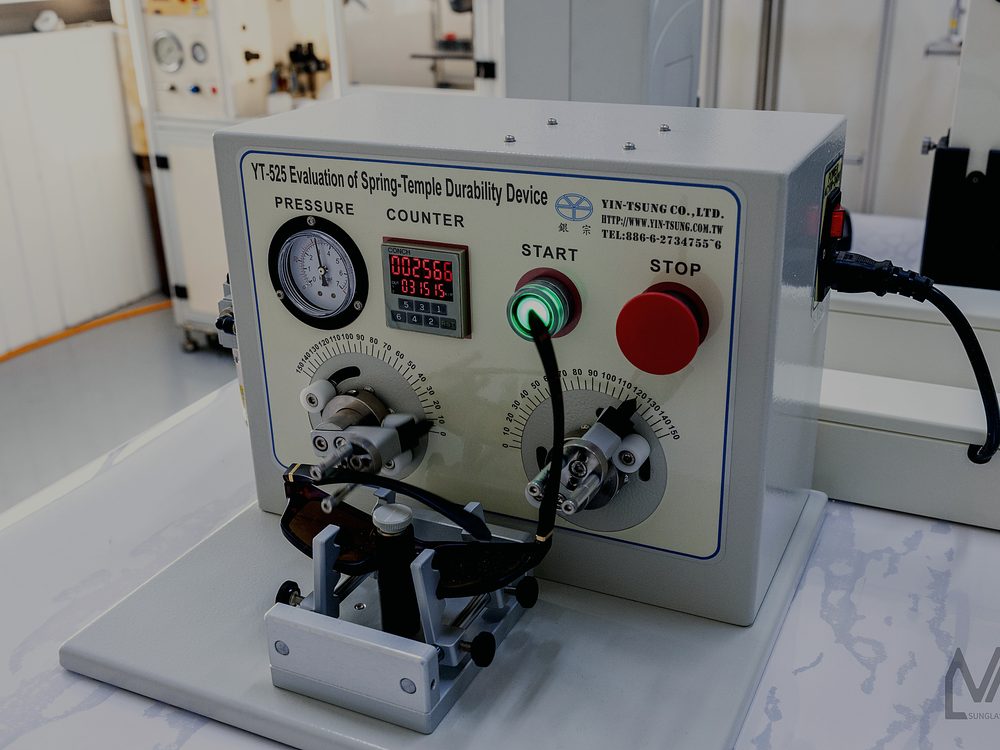
Spring hinges cycled under load until the count is met, not until they fail.
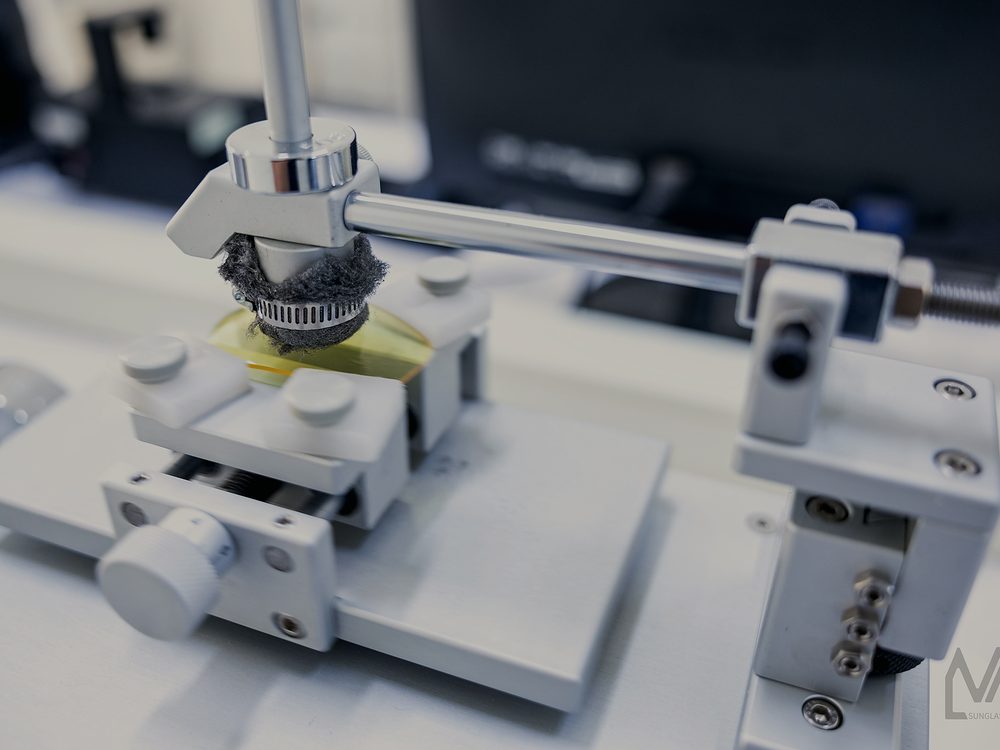
Weighted steel wool across the coating, to see how the finish survives real use.
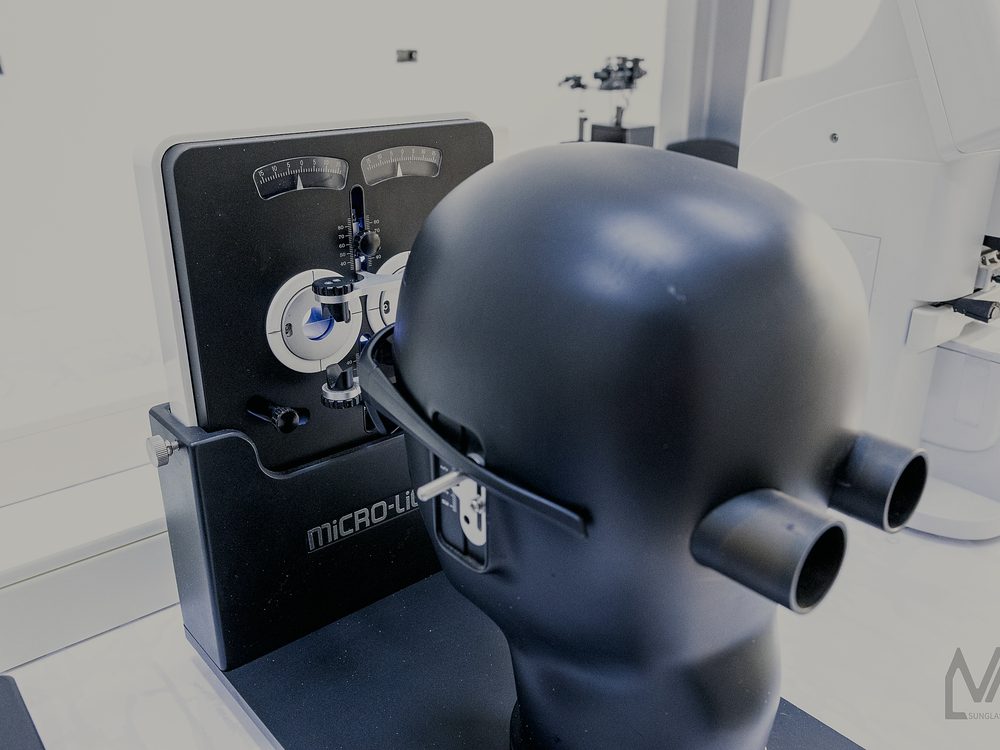
Frames measured on a head form for pantoscopic tilt, wrap and symmetry.
Compliance
Brands selling into Europe, North America and Australasia are asked to prove where their products come from. Here is exactly where we stand on each framework — including the ones still in progress.

Machine guarding, operating procedures and per-machine inspection records are documented and kept current across all 37 machines on the floor — the same records the BSCI audit will draw on. Customer audits of the facility are welcome at any time, and we would rather show you an honest status than a logo we have not earned yet.
Development
Two routes, depending on whether you are adapting a style we already tool or starting from a blank page. Reference figures — complexity, materials, testing and approval speed all move them.
Why Meng Tai
Building frames since 1985 — and only frames. The knowledge is in the building, not in a manual.
Small enough that the mold maker and the press operator talk to each other the same morning.
Tooling, molding, painting, lenses and assembly under one roof, so nothing waits on a subcontractor.
Checks at every stage and a test lab that measures to the standard rather than to opinion.
Honest trade-offs between quality, lead time and cost — and a straight answer when something will not work.
Responsibility
Reducing the plant's environmental impact through solar generation on site.
Recycled and bio-based options for both the eyewear and its packaging.
Improving output while cutting the material used to get there.
Proper PPE, guarded machines and documented safe operating practices.
Contact
The fastest way to get a real answer is a 2D drawing, a 3D file or a physical sample, together with your target quantity, material and market. We will come back with feasibility, a tooling approach and a price — or tell you straight away if it is not a good fit for our floor.
Tell us what you need. Drawings and samples can follow by email.